
Your roof is one of your home’s most significant investments, protecting your family and belongings from Colorado’s demanding climate. When one neighbor’s roof needs replacement after twenty years while another next door is failing at fifteen—despite both homes being built the same year—the difference isn’t random luck. Understanding the specific challenges Colorado homes face helps you make better decisions about materials, contractors, and the maintenance practices that protect your investment.
The factors affecting roof lifespan in Colorado extend well beyond the manufacturer’s rated warranty years, with actual service life typically ranging from 15 to 30 years depending on roofing material selection, installation workmanship, maintenance practices, attic ventilation design, roof geometry, and—most critically—exposure to hail damage, intense high-altitude ultraviolet radiation, freeze-thaw temperature cycling, snow loads, and high winds that characterize the region’s severe weather patterns. Colorado roofs frequently reach the lower end of national lifespan estimates because the state’s unique combination of weather extremes, elevation-related solar intensity, and rapid temperature fluctuations place extraordinary stress on roofing systems, making proper installation, routine inspection, and prompt repair more important than the material’s theoretical longevity alone.
A manufacturer rating of thirty years provides a general performance benchmark under controlled conditions, but that number represents neither a guarantee nor an accurate prediction for your specific roof. In Colorado, a roof may require complete replacement following a single severe hailstorm even when it still has a decade of rated service life remaining. Natural weathering gradually reduces shingle flexibility and protective granule coverage over years of exposure, while sudden storm damage can cause immediate, localized failure during one afternoon. Multiple interacting factors—some within your control, others determined by weather and geography—ultimately determine whether your roof protects your home for two decades or needs attention after fifteen years.
TABLE OF CONTENTS
- Understanding Factors Affecting Roof Lifespan in Colorado
- Colorado Weather Conditions That Shorten Roof Life
- Installation Quality, Materials, and Roof Design Elements
- Maintenance Practices and Building Code Compliance
- Making Informed Roofing Decisions for Colorado Homes
KEY TAKEAWAYS
- Colorado roofs typically last 15-30 years depending on multiple interacting factors you can influence through smart decisions
- Hail damage, intense UV exposure, and freeze-thaw cycles create unique challenges that reduce your roof’s lifespan faster than national averages
- Proper installation workmanship and material selection matter more than manufacturer warranties for actual performance in Colorado’s climate
- Regular roof health reports and prompt repairs extend your roof’s service life and protect your property investment
- Understanding these factors helps you choose the right materials and contractors to maximize your roof’s longevity
The following sections break down the specific weather challenges, installation factors, and maintenance strategies that determine whether your Colorado roof reaches its full potential lifespan or requires premature replacement, giving you the knowledge to protect one of your home’s most critical systems.
Understanding Factors Affecting Roof Lifespan in Colorado
The factors affecting roof lifespan in Colorado create a complex interaction between your roof’s physical characteristics and environmental stresses unique to the region. Material composition forms the foundation—asphalt shingles typically serve 15-25 years in Colorado conditions, while metal roofing often reaches 30-40 years, and tile or slate can exceed 50 years with proper installation. However, these baseline expectations shift dramatically based on your home’s specific location, with Front Range properties facing different challenges than mountain communities. Elevation affects UV intensity, neighborhood tree coverage influences debris accumulation, and your roof’s directional orientation determines sun exposure patterns that accelerate or moderate aging.
Installation quality represents the most controllable variable among factors affecting roof lifespan, yet many homeowners discover its importance only after premature failure occurs. A properly installed roof system includes correctly positioned underlayment, appropriate nail placement and depth, proper flashing integration at all penetrations and valleys, and adequate ventilation design that prevents moisture accumulation and heat buildup. When contractors rush installation or skip critical steps to reduce costs, your roof may look acceptable initially but fail years before its expected service life ends. Choosing experienced contractors familiar with Colorado-specific installation requirements protects your investment more effectively than selecting premium materials installed incorrectly. For guidance on selecting appropriate roofing systems, review choosing the right roofing material for your home to understand material performance differences in local conditions.
Colorado Weather Conditions That Shorten Roof Life
Hail damage stands as the single most destructive weather factor affecting roof lifespan across Colorado’s Front Range and eastern plains, with the state experiencing more hailstorms annually than nearly any other region nationwide. A single severe hailstorm producing golf-ball-sized or larger hail can compromise shingle integrity across your entire roof in minutes, creating granule loss, mat fractures, and seal damage that accelerate weathering and eventually require complete replacement. Even smaller hail events cause cumulative damage over multiple seasons, gradually reducing your roof’s protective capabilities. Colorado’s hail season peaks from April through September, with afternoon thunderstorms developing rapidly as warm plains air meets mountain weather systems, giving homeowners little warning before damaging storms arrive.
High-altitude ultraviolet radiation and extreme freeze-thaw cycling create additional factors affecting roof lifespan that distinguish Colorado from lower-elevation states with milder climates. UV exposure at Colorado elevations reaches 25-30% higher intensity than sea-level locations, breaking down the petroleum-based compounds in asphalt shingles and causing accelerated brittleness and granule adhesion failure. Temperature fluctuations between daytime heating and nighttime freezing occur frequently throughout spring and fall, causing roofing materials to expand and contract repeatedly—this cycling stresses sealant bonds, creates micro-fractures in shingles, and works fasteners loose over time. Understanding these weather-related challenges helps explain why roofs age faster in Colorado than manufacturer warranties might suggest for standard climate conditions.
Installation Quality, Materials, and Roof Design Elements
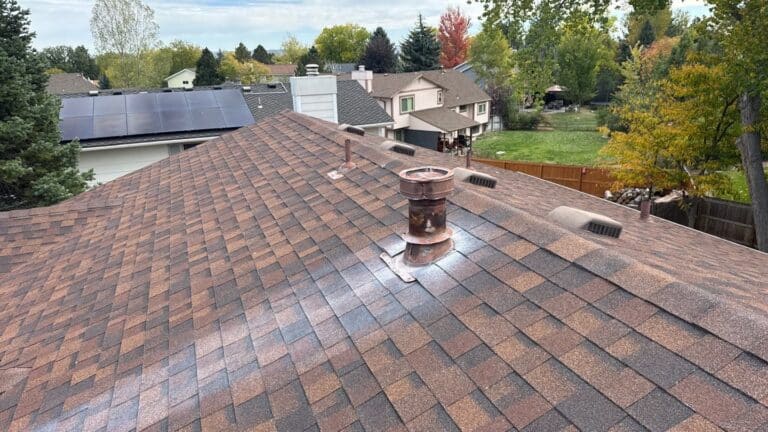
Proper installation workmanship directly influences the factors affecting roof lifespan by determining how effectively your roofing system withstands Colorado’s weather extremes from its first day of service. Underlayment selection and installation create the critical secondary barrier protecting your roof deck—premium synthetic underlayment resists UV degradation and temperature cycling better than traditional felt products, while ice-and-water shield placement along eaves and valleys prevents moisture infiltration during snow melt and ice dam formation. Flashing installation at chimneys, skylights, vent pipes, and wall intersections requires precise technique and appropriate sealants to maintain watertight integrity through years of expansion-contraction cycles. Contractors who understand Colorado-specific requirements install these components differently than they would in milder climates.
Roof geometry and ventilation design represent often-overlooked factors affecting roof lifespan that significantly impact material performance and longevity. Steeper roof pitches shed snow and water more effectively than low-slope designs, reducing standing moisture that accelerates deterioration, while complex roof lines with multiple valleys and penetrations create additional failure points requiring careful attention during installation. Adequate attic ventilation maintains proper temperature balance, preventing heat buildup that prematurely ages shingles from below and reducing ice dam formation during winter months. Ridge vents, soffit vents, and proper insulation work together as a system—when any component fails or was incorrectly installed, your entire roof suffers accelerated aging regardless of surface material quality. Property managers and homeowners benefit from understanding when roof repair versus replacement becomes the appropriate solution based on these underlying system components.
Maintenance Practices and Building Code Compliance
Regular maintenance directly extends the factors affecting roof lifespan by addressing small problems before they develop into system-wide failures requiring complete replacement. Professional roof inspections identify granule loss patterns, seal failures, flashing deterioration, and ventilation problems during their early stages when targeted repairs cost hundreds rather than thousands of dollars. Debris removal prevents water pooling and organic growth, while prompt repair of storm damage stops moisture infiltration that rots roof decking and compromises structural integrity. Many Colorado homeowners assume annual inspections provide adequate monitoring, but properties exposed to severe weather, surrounded by trees, or experiencing previous damage benefit from more frequent professional evaluation throughout the year.
Building code compliance represents one of the most important factors affecting roof lifespan, particularly for replacement projects that must meet current standards regardless of when your home was originally built. Colorado building codes specify minimum wind ratings, fire resistance classifications, and installation requirements based on your property’s specific location and exposure category. Permits ensure inspectors verify proper installation techniques, appropriate materials for local conditions, and adequate structural support for snow loads and wind uplift forces. Unpermitted roof work may save money initially but creates liability issues, potential insurance claim denials, and installation deficiencies that shorten your roof’s service life. Understanding why once-a-year roof maintenance isn’t always enough helps Colorado homeowners develop appropriate inspection schedules based on their specific circumstances and exposure risks.
Making Informed Roofing Decisions for Colorado Homes
Understanding the factors affecting roof lifespan empowers you to make informed decisions about contractor selection, material choices, and maintenance investments that protect your home and maximize your roofing system’s performance years. Contractor selection should prioritize local experience with Colorado-specific challenges, proper licensing and insurance coverage, manufacturer certifications for the products they install, and verifiable references from recent projects in your area. Material selection requires balancing upfront costs against long-term performance, with impact-resistant shingles, upgraded underlayment, and enhanced ventilation systems often providing better value than basic products despite higher initial investment. Your roof’s expected service life depends less on manufacturer ratings than on how well the complete system addresses the specific weather challenges your property faces.
Proactive maintenance and prompt damage response extend your roof’s functional lifespan more effectively than reactive replacement after failure occurs. Establishing relationships with qualified roofing contractors before emergencies arise ensures you receive prompt service when storm damage occurs and creates documentation of your roof’s condition over time. Professional roof health reports identify developing problems, provide photographic evidence for insurance claims when needed, and help you budget for eventual replacement based on actual condition rather than age alone. Colorado’s demanding climate makes roofing one of your home’s most critical systems—informed decisions about installation, materials, and maintenance protect that investment. Learn more about how roof repairs create long-term savings by preventing small problems from developing into expensive system failures.
The factors affecting roof lifespan in Colorado create unique challenges that demand informed decision-making about installation, materials, and ongoing care. While you cannot control the weather extremes your roof faces, you maintain significant influence over installation quality, maintenance practices, and prompt response to damage—decisions that often determine whether your roof reaches twenty-five years or requires replacement at fifteen. Professional roof health reports provide the documentation and early problem identification that extend your roof’s service life and protect your property investment. When you understand how Colorado’s climate stresses roofing systems differently than milder regions, you can work with qualified contractors to implement the installation techniques and maintenance strategies your home needs. If you would like to schedule a comprehensive roof health report to assess your current roof’s condition and identify any developing concerns, we provide the detailed evaluation Colorado homeowners need to make confident decisions about their roofing systems.
How does proper attic insulation affect my roof’s lifespan in Colorado’s climate?
Attic insulation works with ventilation as a complete system that significantly influences roof longevity by controlling temperature transfer and moisture accumulation. Inadequate insulation allows excessive heat to escape through your roof during winter, melting snow that refreezes at eaves and creates ice dams that force water under shingles and damage roof decking. During summer months, insufficient insulation lets attic temperatures exceed 150°F, which accelerates shingle aging from below and reduces their flexibility and protective capabilities. Proper insulation levels (R-49 to R-60 for Colorado homes) combined with adequate ventilation maintain consistent attic temperatures that prevent these damaging cycles and extend your roofing system’s functional service life.
Should I replace my roof before selling my Colorado home even if it still has several years left?
Replacing an aging roof before listing your property often improves sale prospects and final price, particularly in Colorado’s competitive real estate market where buyers understand local weather challenges and scrutinize roof condition carefully. Roofs approaching 15-20 years of age may function adequately but create concerns during buyer inspections that reduce offers, trigger renegotiations, or complicate financing approval when lenders question remaining service life. A new roof typically returns 60-70% of its cost in increased sale price while eliminating a major negotiation obstacle, and replacement before sale gives you control over contractor selection and material choices rather than accepting buyer demands or price reductions. However, roofs under ten years old with documented maintenance history and no visible damage generally don’t require preemptive replacement for sale purposes.
What documentation should I maintain to track my roof’s condition and maximize its lifespan?
Comprehensive roof documentation creates valuable records that guide maintenance decisions, support insurance claims, and demonstrate responsible ownership when selling your property. Maintain dated photographs showing overall roof condition and specific areas of concern, professional inspection reports with detailed findings and recommendations, receipts for all repairs and maintenance work performed, and warranty documents for materials and installation workmanship. This documentation helps you identify developing patterns such as recurring problems in specific roof areas, provides baseline comparisons that reveal whether deterioration is progressing normally or accelerating unexpectedly, and creates the evidence insurance adjusters require when processing hail damage or wind claims. Digital files with cloud backup ensure you won’t lose critical records, and sharing this documentation with prospective buyers demonstrates the proactive care that justifies premium pricing for well-maintained properties.
Citations:
https://www.roofingalmanac.com/blog/roof-lifespan-by-material
https://www.coloradoroofing.org/news/how-long-should-your-roof-last-in-colorados-climate
https://www.yourcommercialroofer.com/blog/how-long-does-a-roof-last-in-colorado
https://www.goinproconstruction.com/blog/how-long-does-a-roof-last-in-colorado-weather